
Sedgwick County Arrest Records and Court Charges
Arrest records in Sedgwick County start with the law enforcement event. The Sedgwick County Sheriff's Office is the official local source for sheriff custody questions, police record requests, and bond information tied to a person held after arrest. The county lists Sheriff Koby Quayle at the courthouse office in Julesburg and states that the office patrols the county, handles citizen calls, investigates crime, and performs traffic enforcement. That local sheriff record is not the same thing as a court charge record.
The court charge record begins when a prosecutor files a complaint, information, ticket, or other charging document with the Clerk of Court. Sedgwick County state cases run through Sedgwick Combined Court in the 13th Judicial District. The court file may show the case number, case class, party names, filing year, complaint or information, Register of Action, disposition, and sentence order. For the broader case file and final outcome, the full criminal court records page is the better match.
The sheriff page captured in the manifest shows the official office context for Sedgwick County arrest records. Source: Sedgwick County Sheriff's Office contact and duties.
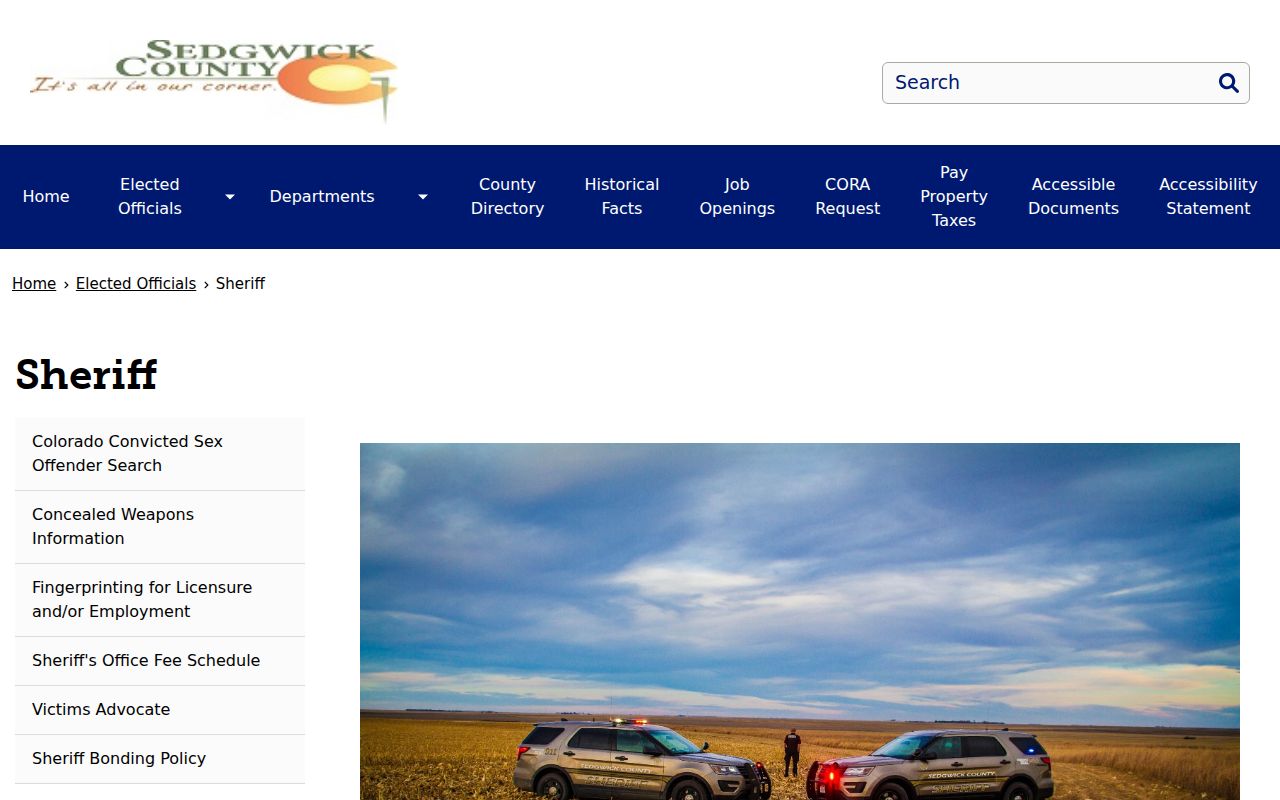
That office is the local channel for arrest-side questions, while filed charges and dispositions are requested from the court.
Sedgwick County Charges After Arrest
Charges after arrest are not just a repeat of the arrest report. The 13th Judicial District Attorney is the prosecuting authority for felonies, misdemeanors, and some traffic offenses in Sedgwick County. The official DA site says the district covers Logan, Morgan, Phillips, Washington, Sedgwick, Yuma, and Kit Carson counties. Once prosecution starts, the filed charge becomes part of the court record held by the Colorado Judicial Branch, not the county recorder.
A Sedgwick County charge record may be located through the Judicial Branch docket search when the case is active or scheduled, then requested through the official court record form when a copy is needed. The form names criminal document options such as Complaint/Information, Disposition/Sentence Order, Protection Order, Ticket, and Register of Action. The Register of Action is useful because the research defines it as a short case summary with charges, sentences, and minute orders.
| Charging Document | Who Uses It | What It Usually Shows | Sedgwick County Request Path |
|---|---|---|---|
| Complaint | Officer or prosecutor | Initial accusation or charging basis after an arrest or citation. | Request criminal documents from Sedgwick Combined Court. |
| Information | Prosecutor | Formal prosecutor-filed charge, often used in felony practice. | Use the court record request form and include party names. |
| Indictment | Grand jury | Formal accusation returned through a grand jury process. | Ask the court for the criminal file or Register of Action. |
The 13th Judicial District Attorney source is useful for understanding why an arrest can lead to one filed charge, several charges, or no filed charge.
Search Sedgwick County Arrest Records
There is no official Sedgwick County mugshot database or local online booking list in the research file. For the arrest side, use the sheriff phone or office contact first. For the court charge side, use the Colorado Judicial Branch docket search and the court record/document request form. The docket search is best for hearing and case leads. The request form is best for actual copies of the complaint, information, ticket, disposition, or Register of Action.
- Call or visit the Sedgwick County Sheriff's Office for local custody, bond, and police record request questions.
- Search the Judicial Branch docket by date plus another filter, such as Sedgwick County, Sedgwick Combined Court, party name, or case number.
- Use the record request form when the filed complaint, information, ticket, disposition, or sentence order is needed.
- Select Sedgwick County as the county or location of record and provide party names, case number, filing year, or date of birth when known.
- Ask for certified or exemplified copies only when an official copy is needed for legal, licensing, or agency use.
Court requests can carry fees. The research lists copy charges, a name search fee, certification charges, off-site retrieval costs, and research or redaction time after the first hour. For sheriff police records, the fee schedule lists a lower fee for a basic police record request and a higher fee for police records older than five years.
Note: CBI criminal history is a statewide background-check product, not a Sedgwick County booking or live charge database.
Sedgwick County Charge Status
A filed charge may change. That is why the current status matters as much as the charge label. A charge listed early in a Sedgwick County case may be amended, reduced, dismissed, or resolved by plea or trial. One arrest can produce several charges. Some counts may be dismissed while another count leads to a conviction. The court record is the place to verify the current status because it tracks case events, minute orders, disposition, and sentencing.
| Status | Meaning in a Charge Record | Where to Verify |
|---|---|---|
| Pending | The accusation has been filed and has not reached final disposition. | Docket search, court file, or Register of Action. |
| Amended | The charge language, count, level, or statutory basis changed after filing. | Filed amended complaint or court minutes. |
| Reduced | The charge was lowered, often through plea negotiation or court action. | Disposition or plea record. |
| Dismissed | The charge did not result in conviction on that count. | Disposition or order of dismissal. |
| No bond | Release is not available until judicial review under the local bond policy. | Sheriff bond information and court order. |
The sheriff bonding policy gives local context for what may happen after arrest while charges are pending. Source: Sedgwick County sheriff bonding policy.
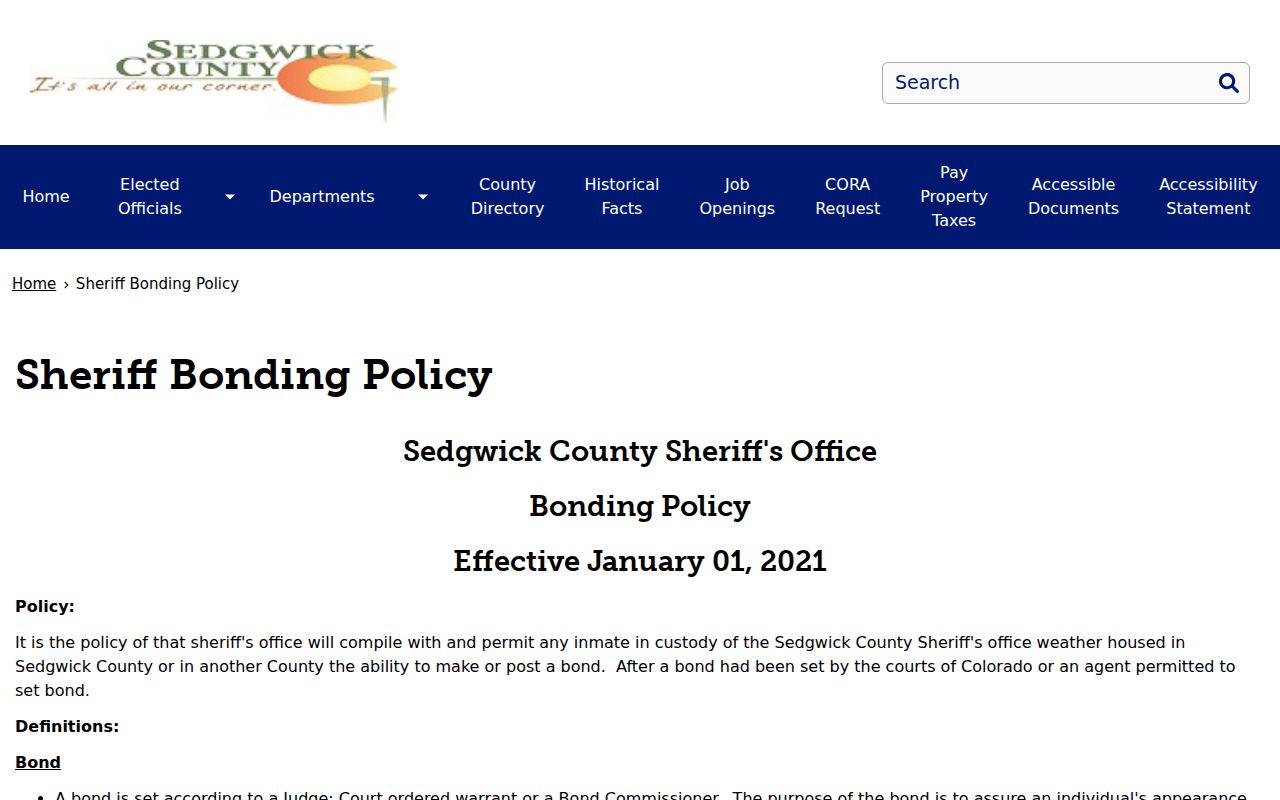
Bond terms do not prove guilt or final outcome; they describe release conditions while the court case moves forward.
Sedgwick County Charges vs Convictions
Being charged is not the same as being convicted. A charge is an accusation filed in court. A conviction is a final result after a guilty plea, verdict, or other qualifying disposition. Sedgwick County arrest records may show the start of a law enforcement event, and the court charge record may show what prosecutors filed. Neither one should be read as a final conviction unless the disposition or sentence order says so.
| Point of Comparison | Charge | Conviction |
|---|---|---|
| Basic meaning | Formal accusation in a complaint, information, indictment, or ticket. | Final finding or plea that resolves guilt on a count. |
| Case stage | Early or mid-case, often before trial or plea. | After plea, verdict, or qualifying disposition. |
| Proof level | Based on the legal standard needed to file or continue a case. | Based on a plea or proof beyond a reasonable doubt. |
| Best record to request | Complaint/Information, Ticket, or Register of Action. | Disposition/Sentence Order or certified judgment record. |
| Background check risk | May appear in a court file or criminal history if reportable. | May appear as a conviction unless sealed or restricted. |
Important: Do not treat a charge line as a conviction without checking the disposition or sentence order.
Sedgwick County Charge Fields
Official research did not inspect a live Sedgwick County criminal case page, so charge fields should be framed from the Judicial Branch form and docket search fields rather than invented sample results. A charge-related court record may include a case number, case class, court location, county, filing year, party names, date of birth, case type, complaint or information, ticket, Register of Action, disposition, sentence, certification choice, fees, and redactions. Case classes in the docket search include CR, M, T, R, and other civil or probate codes.
- Complaint
- Initial pleading or charging paper that states the accusation.
- Information
- Prosecutor-filed charging document in a criminal case.
- Disposition
- Current or final result for a case or charge.
- Register of Action
- Brief case history with charges, sentences, and minute orders.
- Bond
- Amount or condition set to assure court appearance.
The sheriff fee schedule supplies local records and jail fee context connected to arrest records. Source: Sedgwick County sheriff fee schedule.
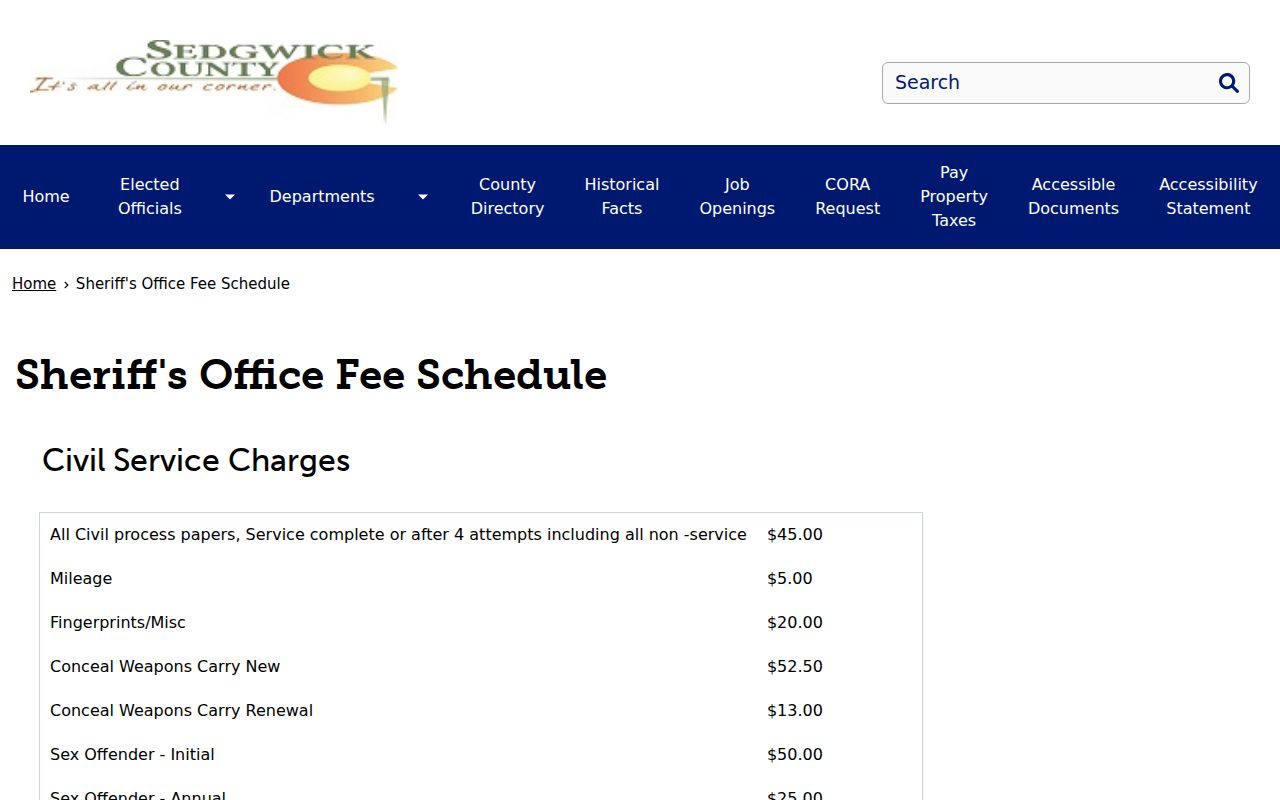
Those fees help distinguish sheriff police records and jail costs from court copy and certification fees.
Sedgwick County Criminal History Checks
Colorado Bureau of Investigation criminal history checks are a separate statewide product. CBI describes the Internet Criminal History Check as a Colorado-only name-based criminal-history search. It can be useful when a person needs a statewide background record, but it is not a live Sedgwick County warrant search, not a jail roster, and not the same as the full court file. CBI also notes exclusions such as juvenile arrests, traffic arrests under age 16, and sealed cases.
For filed Sedgwick County court charges after arrest, the court request form is more direct. For statewide criminal-history reporting, use CBI Internet Criminal History Check information. For sealing, the research cites Colorado criminal justice record sealing statutes and the CBI sealing page. Eligibility depends on charge type, outcome, waiting period, statutory exclusions, and court orders.
Restricted Sedgwick County Arrest Records
Some Sedgwick County arrest records and charge records are not open to the public. Juvenile records may require government-issued photo ID and can be limited to parties, attorneys, or persons with legal authority. Sealed records may not appear in ordinary public searches. Mental health material, protected addresses, dates of birth, Social Security numbers, financial account data, and victim-protection details may be redacted from copies.
Colorado access rules also separate court records from county records. Judicial Branch court files are governed by court access rules and Chief Justice Directives. County-government records outside the court file may use the county CORA process. For a dismissed or old arrest, do not assume public access or sealing eligibility from the charge label alone. The practical route is to request the court disposition, compare it with any CBI result, and review the sealing process if the record qualifies.
Note: The public defender's Sterling office serves eligible defendants, but it is not a general public-records source.